The Problem
The client is an Australian software company serving local government customers. Their platform held years of operational data for councils — everything from resource allocation to service delivery metrics. But there was a fundamental access problem: council staff couldn't use the data without going through the vendor.
Every new insight required a custom dashboard request or a bespoke report, each taking days to scope, build, and deliver. The vendor's team was spending the majority of their time on reactive reporting instead of building product. Meanwhile, the data that could drive better decisions sat largely untouched because the people who needed it most — council managers, department heads, planners — had no way to explore it themselves.
What We Built
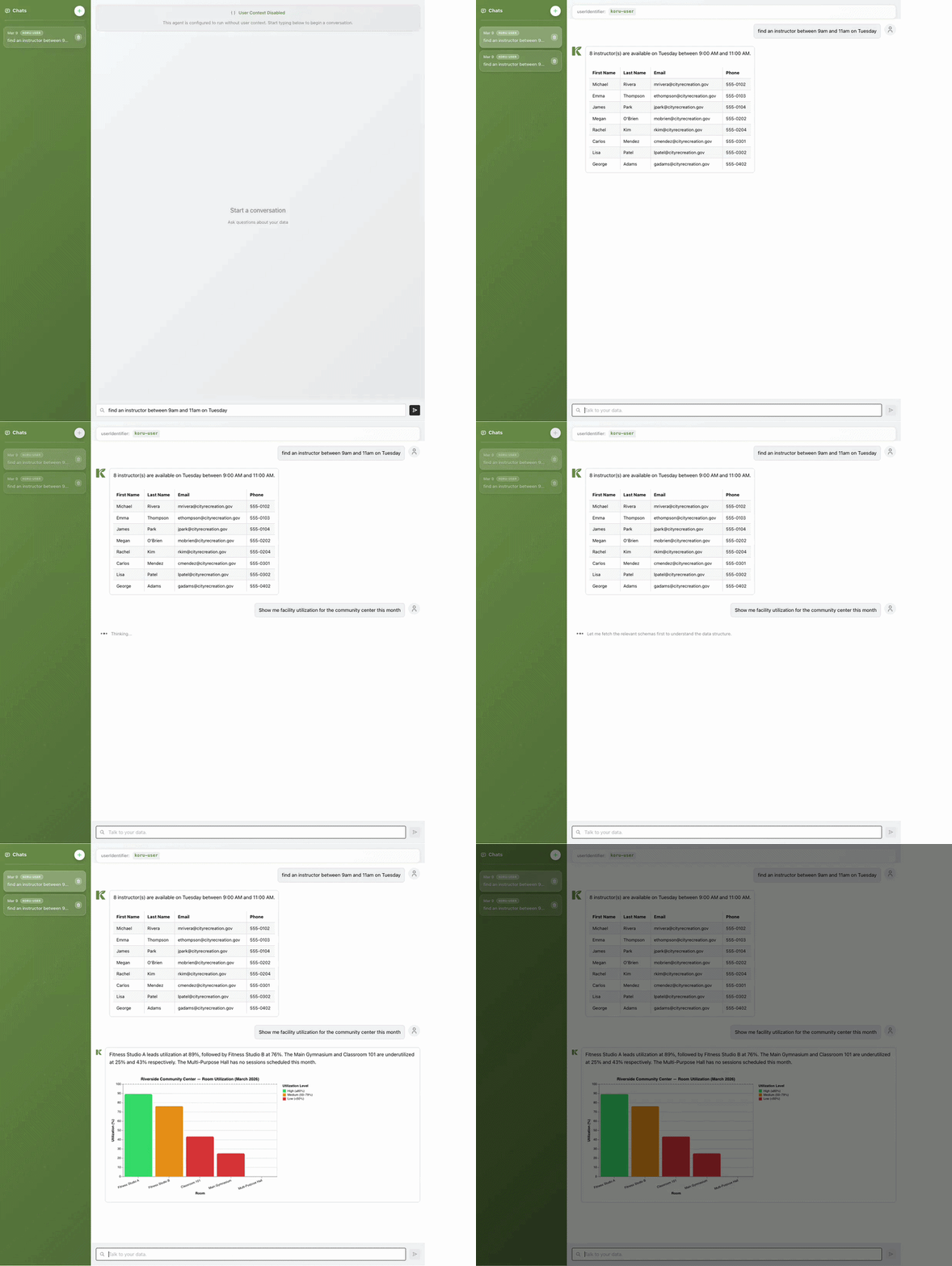
A conversational AI agent that sits on top of the client's existing data infrastructure and lets end users query their data in natural language. Ask a question, get an answer. Ask for a comparison, get a chart. No SQL. No dashboard request. No waiting.
Under the hood, the system has several layers:
ETL Pipeline & Data Preparation
We built an ETL pipeline to prepare the underlying data for agent consumption. This included selecting which columns were queryable, deriving new computed columns that mapped to how council staff actually think about their data (not how it's stored in the database), and structuring the schema so the agent could reason about it reliably.
Permission-Aware Query Layer
Local government data has strict access requirements. Different departments and roles see different slices of data. We implemented role-based access control at the query layer so the agent enforces permissions natively — a parks department manager sees parks data, not HR payroll.
Conversational Interface with Dynamic Visualization
The agent handles natural language queries and determines whether the response should be text, a table, or a generated chart. When a user asks "how does this quarter compare to last quarter for service response times," they get a chart — automatically, without asking for one.
Learning Pipeline & Lifecycle Management
We built a feedback loop to capture unanswered or poorly answered queries. These get surfaced for review, allowing the system to improve over time. This also gives the client visibility into what their users are actually trying to learn from the data.
The Results
"Our mission is to help local governments make data-driven decisions. This conversational AI agent transformed our platform into a true self-service solution that lets council staff get the insights they need instantly, without technical barriers."
Why This Matters
The real story here isn't "we built a chatbot." It's that we shifted the data access model from vendor-dependent to self-serve. For govtech companies serving dozens of councils, that's a multiplier — every customer benefits without the vendor scaling their reporting team linearly.
And because it deploys into the customer's own cloud, there's no data residency concern, no new vendor dependency, and no ongoing platform lock-in.
The world's local government technology sector serves thousands of councils globally. These platforms manage everything from resource allocation to service delivery, making data accessibility crucial for effective governance and citizen services.